Quick answer
The best startup backlink strategy is not to submit the same description to 75 websites. It is to build a useful, consistent footprint across the few third-party sources that match your company: claimable profiles, relevant communities, credible publishing platforms, and earned editorial coverage.
This guide turns a list of 75 potential sources into an operating plan. Every source in the database below has a direct platform link, access model, effort level, best-fit company, recommended approach, required assets, and priority. Start with the first 15, measure what becomes live and useful, then expand deliberately.
One important caveat: these are 75 possible authority sources, not 75 guaranteed backlinks. A placement may produce a followed link, a nofollow link, a brand mention, a referral path, or no link at all. The value depends on relevance, editorial quality, audience fit, indexability, and whether the profile or contribution is genuinely useful.
Why your website is not the whole authority story
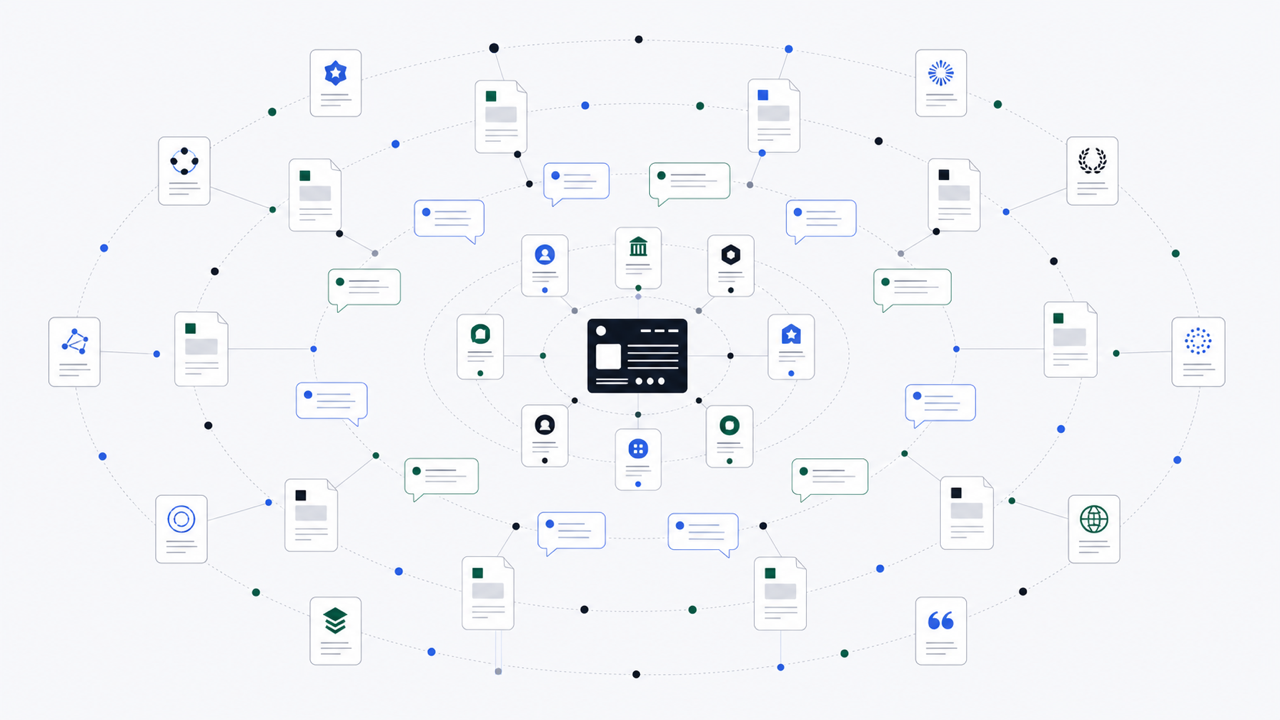
Your website should be the clearest source of truth about your company. It is where you control positioning, product facts, documentation, and conversion. But buyers, search engines, and AI answer systems also encounter your brand elsewhere.
They may find:
- a product record on Crunchbase or AlternativeTo;
- verified customer opinions on TrustRadius;
- a repository and documentation on GitHub;
- a launch discussion on Product Hunt or Hacker News;
- a founder explaining a hard-earned lesson on Medium or Substack;
- an independent comparison, interview, or news article;
- a candid answer in a relevant Reddit community.
Those sources perform different jobs. A directory helps establish that the company and product exist. A review page records customer experience. A community thread reveals how practitioners talk about the problem. An editorial article can independently validate a claim. Together, accurate third-party references can make a brand easier to verify and understand.
That does not mean more mentions automatically cause better search rankings or AI recommendations. AI platforms use different models, retrieval systems, indexes, and citation methods. The practical goal is simpler: create credible, consistent evidence in the places your market already uses, then measure whether those sources appear in search results, referral traffic, and AI answers.
Backlink, listing, mention, and citation are not interchangeable
Before choosing a platform, decide what outcome you actually need.
| Outcome | What it is | What makes it useful |
|---|---|---|
| Listing | A company, product, or founder profile | Accurate category, description, ownership, and current details |
| Brand mention | Your company is named, with or without a link | Relevant context and consistent facts |
| Referral link | A clickable path that can send visitors | Qualified audience and a matching destination page |
| Editorial backlink | An independent publisher links while covering a useful story or resource | Editorial relevance, trust, and a reason the link belongs |
| AI citation | An AI answer identifies a source URL | Retrieval relevance, accessibility, and support for the answer |
Chasing only the link misses the point. A well-maintained product page that prospective customers actually consult may matter more than a followed link on an unrelated page. An unlinked mention in a respected industry publication may strengthen branded discovery. A helpful community answer can drive better leads than a generic directory profile.
Domain Rating is also not a quality score for an individual page. The DR numbers shown in the database are the supplied third-party estimates from the original social list, reviewed in July 2026. They can change, and they do not tell you whether a submission is accepted, indexed, followed, visible, relevant, or valuable. Treat them as rough context, never as a promise.
The four-rung Authority Ladder
The 75 sources become easier to use when you separate them by the kind of authority they require.
Rung 1: Claimable profiles and product listings
These are the facts you can responsibly establish yourself: company name, product category, founders, website, pricing model, screenshots, and official links. Examples include Crunchbase, AlternativeTo, SaaSHub, SourceForge, and relevant review platforms.
Start here because inconsistent basics create avoidable confusion. Use one canonical description, but adapt it to each platform's format rather than pasting an identical block everywhere.
Rung 2: Participatory communities
Communities such as Indie Hackers, Hacker News, Reddit, and specialist founder groups reward participation, not distribution. You earn attention by answering questions, sharing evidence, admitting tradeoffs, and respecting local rules.
The standard is straightforward: would the post still help if the reader never clicked your link? If not, it is probably promotion rather than participation.
Rung 3: Contributed expertise
Publishing platforms and contributor programs let a founder demonstrate expertise through original analysis, tutorials, datasets, or lessons. Medium, Substack, Hashnode, DEV, HackerNoon, and DZone can fit here, depending on the audience.
Do not create 10 thin versions of one article. Publish the strongest version on the channel that reaches the right people. If you syndicate owned content, use the platform's canonical-link feature where available so the original source is clear.
Rung 4: Earned editorial and reference coverage
Forbes, TechCrunch, VentureBeat, YourStory, First Round Review, Starter Story, and similar publications are not self-service backlink forms. Coverage is earned through a relevant story, original data, a notable milestone, credible expertise, or a strong fit with an editor's audience.
Wikipedia belongs at this rung too. A company does not qualify for an article because it wants one. Independent, reliable, substantial coverage must already exist, and conflicts of interest must be handled transparently under Wikipedia's notability and conflict-of-interest guidance.
The ladder is a sequence, not a score. Complete accurate, claimable facts first. Participate where you genuinely belong. Publish expertise worth referencing. Pitch earned coverage only when there is an independent reason to care.
Start with these 15 sources
The original list contains several famous domains, but fame is not a useful order of operations. This first-15 sequence favors realistic startup fit, clear submission paths, and a balanced footprint.
| # | Source | Best use | Access | Effort |
|---|---|---|---|---|
| 1 | Crunchbase | Establish a current company and founder record | Free profile; paid data plans | Low |
| 2 | Product Hunt | Coordinate a real technology-product launch | Free; paid promotion available | High |
| 3 | GitHub | Publish code, documentation, examples, or templates | Free; paid team plans | Medium |
| 4 | AlternativeTo | Help software buyers compare genuine alternatives | Free | Low |
| 5 | TrustRadius | Build an honest B2B customer-review presence | Free profile; paid vendor plans | Medium |
| 6 | SourceForge | Create or claim a software listing | Free listing; paid programs | Medium |
| 7 | SaaSHub | Map a SaaS product to accurate categories and alternatives | Free listing; paid promotion | Low |
| 8 | StackShare | Document a real technology stack or developer product | Free profiles; paid teams | Medium |
| 9 | BetaList | Introduce a pre-launch product to early adopters | Free queue; paid fast track | Medium |
| 10 | Indie Hackers | Share useful, transparent founder progress | Free | Medium |
| 11 | Hacker News | Show a working technical product or original research | Free | High |
| 12 | Help a specific community solve a relevant problem | Free; paid ads | High | |
| 13 | Medium | Distribute original founder analysis or canonical syndication | Free; membership optional | Medium |
| 14 | Substack | Build a focused, recurring founder publication | Free; paid subscriber fees | Medium |
| 15 | Toolify AI | List a working public AI product in the right category | Free and paid submission options | Low |
This sequence still needs to be filtered by fit. A nontechnical local clinic should not open a GitHub repository to manufacture a link. A browser extension should prioritize the Chrome Web Store. A privacy product may have a credible case for Privacy Tools. A visual consumer brand may get more value from Pinterest than StackShare. Relevance beats completion.
A practical six-week rollout
Do not attempt all 15 in one afternoon. A sustainable sequence looks like this:
- Week 1: lock the source of truth. Finalize the company name, one-sentence category description, longer description, founders, official URLs, pricing language, and brand assets.
- Week 2: claim foundational records. Complete Crunchbase and the software directories that accurately fit the product.
- Week 3: improve proof. Claim the relevant review profile and create an ethical process for inviting real customers to review. Never buy or script reviews.
- Week 4: publish something useful. Ship documentation, a public example, a benchmark, a teardown, or an original founder lesson.
- Week 5: join one community. Choose the community where your team can answer real questions consistently. Read its rules before posting.
- Week 6: launch or pitch only if ready. A Product Hunt launch, Show HN, or editorial pitch needs a working product, clear story, and someone available to respond.
Prepare one authority asset kit
Most incomplete listings fail for boring reasons: a blurry logo, conflicting descriptions, an abandoned founder profile, or no proof behind a claim. Prepare this kit once, keep it current, and adapt it to each platform.
- company name, legal name where required, founding year, and headquarters;
- 15-word, 50-word, and 150-word descriptions using the same core category language;
- official homepage, product, pricing, documentation, support, privacy, and social links;
- square logo, wordmark, 16:9 product screenshot, and a short demo;
- founder names, roles, biographies, headshots, and profile links;
- product categories, use cases, target customer, supported platforms, and pricing model;
- three verifiable proof points with a source for each;
- customer-review invitation language that asks for honest feedback without incentives;
- media contact, press facts, and a short explanation of what is actually newsworthy;
- tracking parameters for referral links and an owner for every profile.
Keep claims factual. If a platform asks for “best,” “leading,” customer counts, revenue, or adoption, provide evidence or choose plainer wording.
How to evaluate all 75 opportunities
The database below gives every source the same seven operating fields. Use them as a decision system, not as decoration.
1. Access
“Free” may mean free to create a profile, not free promotion or guaranteed publication. “Editorial” means an editor decides. “Community-curated” means acceptance depends on written and unwritten standards. Paid access can be legitimate, but payment does not transform advertising into editorial endorsement.
2. Effort
Low effort generally means a factual profile. Medium effort requires a complete submission, ongoing participation, or original content. High effort requires a working launch, credible pitch, customer program, original research, or sustained contribution.
If a source promises prestigious coverage with no real editorial effort, examine the offer carefully.
3. Best fit
A source is valuable when its audience, content format, and eligibility match the company. The “best for” field is permission to skip. A SaaS founder should not force a presence on a photography library; a local business should not ignore a well-maintained local profile because its DR is lower than a global publication.
4. How to get listed or mentioned
Each entry identifies the legitimate route: claim, submit, publish, contribute, participate, or pitch. Avoid shortcuts such as fake accounts, undisclosed promotion, vote coordination, paid reviews, or links inserted into unrelated user-generated pages. Google's spam policies for web search explicitly address link spam and large-scale content created mainly to manipulate rankings.
5. Required assets
Required assets expose readiness. Product Hunt needs a launch package and active makers. Hacker News needs a working product or substantive research. A publication pitch needs evidence and a reason the story matters now. Wikipedia needs independent sources, not a press kit.
6. Priority
The four database priorities translate the ladder into action:
- Start here: broadly useful, realistic foundations for the right startup.
- Build next: worthwhile after the basics are accurate.
- Situational: useful only for a specific product, audience, geography, or content asset.
- Earned only: editorial or reference coverage that should never be treated as a form submission.
7. Live placement
A submitted form is not an outcome. Record the live URL, publication date, profile owner, last review date, link destination, referral traffic, branded-search appearance, and whether the source turns up in relevant AI answers. Recheck important profiles quarterly.
The working database
The 75-source authority directory
Filter the list, open official destinations, and mark placements as you complete them. Your progress stays in this browser.
Showing 75 of 75 sources
Start here
Foundational profiles and communities that suit most software startups.
Any incorporated or funded startup
Placement notes
- How to earn it
- Create or claim the organization profile and keep people, funding, and links current.
- What to prepare
- Legal name, description, founders, funding, logo, official links
Launch-ready technology products
Placement notes
- How to earn it
- Prepare a real launch, strong maker comment, media, and a team ready to answer questions.
- What to prepare
- Logo, gallery, demo, tagline, maker comment, launch plan
Developer tools, APIs, and open source
Placement notes
- How to earn it
- Publish useful code, examples, templates, or documentation under an appropriate license.
- What to prepare
- Repository, README, license, examples, contribution policy
Software with clear alternatives
Placement notes
- How to earn it
- Suggest the product, select accurate alternatives, and complete the listing.
- What to prepare
- Logo, description, platforms, pricing, competitor set
Established B2B software
Placement notes
- How to earn it
- Claim the product profile and invite real customers to leave honest reviews.
- What to prepare
- Product details, categories, logo, customer review program
B2B software and open source
Placement notes
- How to earn it
- Create or claim a product listing in the correct software category.
- What to prepare
- Product copy, logo, screenshots, categories, pricing
SaaS and software products
Placement notes
- How to earn it
- Add or claim the product and map it to accurate categories and alternatives.
- What to prepare
- Logo, product copy, website, categories, alternatives
Developer infrastructure and B2B tools
Placement notes
- How to earn it
- Create an accurate company stack and product page grounded in real usage.
- What to prepare
- Logo, stack details, product description, customer proof
Pre-launch technology startups
Placement notes
- How to earn it
- Submit before public launch with a working landing page and clear early-access offer.
- What to prepare
- Landing page, logo, screenshot, concise pitch, founder profile
Bootstrapped software founders
Placement notes
- How to earn it
- Create a product profile and share specific progress, setbacks, and lessons.
- What to prepare
- Founder profile, product, milestones, screenshots, honest narrative
Technical products and original research
Placement notes
- How to earn it
- Use Show HN for something people can try; answer questions directly and avoid vote coordination.
- What to prepare
- Working product, technical explanation, founder availability, transparent post
Products with a clear community problem
Placement notes
- How to earn it
- Earn context by helping first, disclose affiliation, and share only where rules permit.
- What to prepare
- Helpful answer, proof, transparent affiliation, community-specific context
Founder expertise and distribution
Placement notes
- How to earn it
- Publish original analysis or use the canonical import tool when syndicating.
- What to prepare
- Original article, author profile, cover, canonical source
Founder-led expertise and newsletters
Placement notes
- How to earn it
- Publish a focused newsletter and earn subscribers through consistent expertise.
- What to prepare
- Editorial premise, author bio, publication art, posting cadence
Public AI tools
Placement notes
- How to earn it
- Submit the working AI product in the most accurate category with transparent pricing.
- What to prepare
- Logo, screenshots, use cases, pricing, website
Build next
Useful second-wave placements once your core company information is consistent.
Developer tools and open-source products
Placement notes
- How to earn it
- Publish useful documentation, examples, or a project site from a repository.
- What to prepare
- Repository, documentation, examples, project domain
Indie founders with public products
Placement notes
- How to earn it
- Create a founder page and add real products, progress, and revenue only if public.
- What to prepare
- Founder bio, product links, logos, optional public metrics
Well-maintained open-source products
Placement notes
- How to earn it
- Submit a public repository that has clear documentation and a working project site.
- What to prepare
- Public repo, license, README, screenshots, live demo
Software and online tools
Placement notes
- How to earn it
- Register and submit the product in the most relevant alternatives category.
- What to prepare
- Logo, short description, website, categories
Expert-led companies
Placement notes
- How to earn it
- Answer real questions completely and link only when the destination adds evidence.
- What to prepare
- Expert profile, complete answer, original examples, supporting source
Small SaaS and indie products
Placement notes
- How to earn it
- Submit a concise product profile with a clear use case and working website.
- What to prepare
- Logo, screenshot, one-line pitch, pricing, founder link
Technical founders and software companies
Placement notes
- How to earn it
- Submit an original technical or operating story with useful detail.
- What to prepare
- Original draft, author bio, diagrams, citations, disclosure
Small apps, SaaS, and side projects
Placement notes
- How to earn it
- Prepare a focused launch page and participate honestly in launch-day discussion.
- What to prepare
- Logo, screenshots, tagline, maker profile, launch copy
Developer tools and enterprise engineering
Placement notes
- How to earn it
- Contribute technical tutorials or analysis that can stand without a product pitch.
- What to prepare
- Technical draft, code examples, diagrams, author bio
Apps and companies built with AI coding tools
Placement notes
- How to earn it
- Sign in, submit a working app, and identify the AI coding stack used to build it.
- What to prepare
- Working app, logo, concise description, maker profile, build stack
Enterprise B2B technology
Placement notes
- How to earn it
- Claim the vendor/product page and build an ethical customer review program.
- What to prepare
- Enterprise categories, product data, logo, customer advocates
Solo and near-solo internet businesses
Placement notes
- How to earn it
- Join with a real founder profile and add an operating product with honest metrics.
- What to prepare
- Founder profile, product page, logo, public metrics if shared
Developer education and engineering teams
Placement notes
- How to earn it
- Publish technical articles from an expert or company blog on a custom domain.
- What to prepare
- Technical draft, code, diagrams, author profile, disclosure
Developer tools and engineering brands
Placement notes
- How to earn it
- Publish code-backed tutorials and use canonical URLs when cross-posting.
- What to prepare
- Technical article, code samples, cover, author or organization profile
Situational
Strong opportunities when the format, audience, or eligibility matches your business.
Browser extensions
Placement notes
- How to earn it
- Publish a useful extension and complete a truthful store listing.
- What to prepare
- Working extension, privacy disclosure, screenshots, support URL
Templates, research, guides, and digital products
Placement notes
- How to earn it
- Publish a genuinely useful digital resource with a complete creator profile.
- What to prepare
- Product file, cover, description, price, creator bio
Privacy-first software
Placement notes
- How to earn it
- Open a transparent contribution only when the product meets the project's privacy and evidence standards.
- What to prepare
- Open documentation, privacy model, audit evidence, comparison case
Local and location-based businesses
Placement notes
- How to earn it
- Claim the real business location and keep details, hours, and categories accurate.
- What to prepare
- Address, phone, hours, categories, photos
Evergreen how-to expertise
Placement notes
- How to earn it
- Publish useful standalone articles; do not turn articles into promotional landing pages.
- What to prepare
- Original article, author bio, supporting images, references
SaaS with verifiable revenue
Placement notes
- How to earn it
- Connect supported revenue data and create a listing only when disclosure fits the business.
- What to prepare
- Verified metrics, product details, founder profile, sale terms if applicable
SEO, AI SEO, and marketing products
Placement notes
- How to earn it
- Build a relevant relationship and pitch a useful tactic, case study, or collaboration.
- What to prepare
- Original insight, result evidence, concise pitch, product context

Visual explainers and community-native stories
Placement notes
- How to earn it
- Share original visual content that stands alone; avoid link-drop posts.
- What to prepare
- Original images, useful captions, disclosure, source URL when relevant
Visual, commerce, design, and consumer brands
Placement notes
- How to earn it
- Publish useful, searchable pins that point to a closely matching destination page.
- What to prepare
- Vertical creative, descriptive copy, landing page, brand profile
Photography-rich organizations
Placement notes
- How to earn it
- Publish owned photography with accurate descriptions and licensing.
- What to prepare
- Original photos, rights metadata, captions, attribution terms
Brands producing licensable media
Placement notes
- How to earn it
- Contribute genuinely useful original media that meets the platform's quality rules.
- What to prepare
- Original media, releases, rights, keywords, contributor profile

Brands producing strong photography or video
Placement notes
- How to earn it
- Upload original, broadly useful visual media rather than branded advertisements.
- What to prepare
- Original photos or video, releases, rights, profile
Authors and companies with published books
Placement notes
- How to earn it
- Claim an author profile or add a legitimate book; it is not a general startup directory.
- What to prepare
- Published book, ISBN, author bio, cover, official site
Experienced growth practitioners
Placement notes
- How to earn it
- Join to contribute expertise or apply as a mentor when experience is verifiable.
- What to prepare
- Professional profile, case studies, expertise, references
Indie makers building in public
Placement notes
- How to earn it
- Join for accountability and share real progress rather than repeated launch promotion.
- What to prepare
- Maker profile, product, progress log, community participation
Creator-led storytelling
Placement notes
- How to earn it
- Publish original stories that fit a Vocal community and disclose company relationships.
- What to prepare
- Original article, author profile, cover image, references
Business operators and experts
Placement notes
- How to earn it
- Follow the publication's style guide and submit a useful original business article.
- What to prepare
- Original article, proof links, author profile, product disclosure
Experienced builders and marketers
Placement notes
- How to earn it
- Participate with detailed, non-promotional operating insight before mentioning a product.
- What to prepare
- Credible profile, useful posts, evidence, community history
Bootstrapped and indie founders
Placement notes
- How to earn it
- Pitch a concise build-in-public story or product lesson relevant to indie founders.
- What to prepare
- Founder story, product, metrics, lessons, screenshots
Brands with a real fan community or fictional universe
Placement notes
- How to earn it
- Contribute neutrally to a relevant community wiki; do not create promotional company pages.
- What to prepare
- Independent references, neutral facts, community relevance
Simple long-form publishing
Placement notes
- How to earn it
- Use it for a real publication or supporting resource, not a thin link satellite.
- What to prepare
- Original posts, author profile, publication identity, editorial plan
Startup vendors with a founder offer
Placement notes
- How to earn it
- Apply as a partner with a genuinely useful founder discount or resource.
- What to prepare
- Partner offer, product details, discount terms, logo
Earned only
Editorial coverage and reference pages that require a real story, evidence, or notability.
Funded companies and credible experts
Placement notes
- How to earn it
- Pitch a newsworthy story, original data, or qualified expert commentary.
- What to prepare
- News hook, proof, data, spokesperson bio, media kit
Indian and Asia-focused startups
Placement notes
- How to earn it
- Pitch a timely founder, funding, impact, or market story relevant to its audience.
- What to prepare
- News hook, founder bio, traction proof, media kit
Founders with teachable growth stories
Placement notes
- How to earn it
- Pitch a distinctive founder lesson, case study, or expert contribution.
- What to prepare
- Founder story, verified results, lessons, bio, photos
Interesting businesses and market stories
Placement notes
- How to earn it
- Pitch a timely, counterintuitive business story backed by data.
- What to prepare
- Sharp hook, numbers, sources, spokesperson, media kit
Design and front-end experts
Placement notes
- How to earn it
- Pitch an original, practical article that fits the published contributor guidelines.
- What to prepare
- Detailed outline, examples, original visuals, expert bio
Newsworthy technology startups
Placement notes
- How to earn it
- Pitch concise, exclusive, verifiable news to the relevant reporter.
- What to prepare
- Embargoed news, metrics, funding facts, founder access, media kit
Enterprise AI, data, and technology
Placement notes
- How to earn it
- Pitch original enterprise technology news or a non-promotional expert contribution.
- What to prepare
- Enterprise angle, evidence, expert author, original draft or news brief
Founders with transparent operating stories
Placement notes
- How to earn it
- Apply with specific numbers, acquisition channels, mistakes, and repeatable lessons.
- What to prepare
- Founder story, revenue proof, timeline, screenshots, photos
SEO, content, and online business case studies
Placement notes
- How to earn it
- Pitch a transparent case study with a useful process and verified outcome.
- What to prepare
- Case study, numbers, timeline, screenshots, tactical lessons
Founders with a useful business story
Placement notes
- How to earn it
- Email a concise reason the founder's experience will help readers; selection is not guaranteed.
- What to prepare
- Founder bio, business story, reader lessons, headshot
Bootstrapped and practical online businesses
Placement notes
- How to earn it
- Suggest a business or interview with real economics and a replicable operating lesson.
- What to prepare
- Business model, revenue context, founder story, proof
Founders with candid lessons
Placement notes
- How to earn it
- Pitch a detailed success or failure story with decisions and numbers readers can learn from.
- What to prepare
- Timeline, decisions, metrics, mistakes, founder photo
Companies with an interesting business model
Placement notes
- How to earn it
- Offer primary-source economics or data that helps explain how the company makes money.
- What to prepare
- Business model, pricing, unit economics, sources, spokesperson
B2B SaaS with shareable metrics
Placement notes
- How to earn it
- Apply or pitch an interview and be ready to substantiate operating metrics.
- What to prepare
- ARR/MRR context, customers, funding, team size, founder availability
Founders with deep operating lessons
Placement notes
- How to earn it
- Pitch a candid interview with a strong business arc and teachable decisions.
- What to prepare
- Founder bio, company history, metrics, turning points
Experienced startup operators
Placement notes
- How to earn it
- Offer a distinctive operating framework backed by firsthand experience and examples.
- What to prepare
- Original framework, operator bio, examples, evidence
SaaS, creator, and small-business tools
Placement notes
- How to earn it
- Pitch a useful small-business story or build relevance through a legitimate AppSumo launch.
- What to prepare
- Customer use case, product proof, founder story, visuals
Qualified how-to experts
Placement notes
- How to earn it
- Contribute neutral, step-by-step expertise; it is not a place for promotional link insertion.
- What to prepare
- Subject expertise, complete process, neutral sources, original visuals
B2B SaaS operators
Placement notes
- How to earn it
- Pitch a concrete SaaS scaling lesson, data set, or event contribution.
- What to prepare
- SaaS metrics, operating lesson, executive bio, evidence
Founders and qualified business experts
Placement notes
- How to earn it
- Pitch timely news or an original operating lesson; avoid paid-link arrangements.
- What to prepare
- News hook or article pitch, bio, evidence, media kit
Bootstrapped founders
Placement notes
- How to earn it
- Apply or pitch a short, candid story with a clear lesson for indie makers.
- What to prepare
- Founder bio, product, milestone, lessons, headshot
SaaS founders with a detailed journey
Placement notes
- How to earn it
- Pitch a founder story or practical SaaS operating lesson relevant to the audience.
- What to prepare
- Founder arc, SaaS metrics, lessons, product context
Remarkable founders, ideas, and business breakdowns
Placement notes
- How to earn it
- Pitch a genuinely surprising business story, idea, or operator with strong numbers.
- What to prepare
- Exceptional hook, metrics, founder story, media readiness
Independently notable organizations
Placement notes
- How to earn it
- Do not create a promotional page; disclose conflicts and rely on substantial independent sources.
- What to prepare
- Independent reliable coverage, neutral facts, conflict-of-interest disclosure
* DR values are estimates supplied with the original list, not a promise of a followed link or a current independent measurement. Relevance, editorial quality, and a truthful company footprint matter more than the number alone.
Use source gaps to guide the work
The right third-party footprint depends on the questions you need to answer.
If buyers cannot confirm that your company exists, complete claimable profiles. If they cannot find credible customer experience, focus on review programs. If AI answers describe the product incorrectly, compare the sources those answers cite with your current facts. If competitors dominate recommendation prompts, identify which directories, discussions, and articles support them before copying their tactics.
Run a free ReachLLM AI Visibility Report to see where your brand and competitors appear across major AI answer platforms. Use the cited-source gaps as a shortlist for useful profiles, content, and outreach, not as a promise that one placement will change an answer.
How to measure whether a placement was worth it
Use a small scorecard instead of counting live links:
| Signal | Question |
|---|---|
| Accuracy | Does the page describe the company, category, and product correctly? |
| Discoverability | Does the page appear for branded or relevant product searches? |
| Referral quality | Did visitors arrive, engage, or convert? |
| Audience response | Did the contribution earn useful discussion, saves, reviews, or follow-up? |
| Citation evidence | Does the page appear in AI answers for a relevant tracked prompt? |
| Maintenance | Is there a clear owner and review date? |
Give a placement time to be crawled and discovered, but do not attribute every ranking or AI-answer change to the newest link. Search and generative answers are influenced by many changing inputs. Track the placement, annotate the date, and look for repeated patterns across prompts and platforms.
What not to do
- Do not submit to all 75 sources regardless of fit.
- Do not use false founder identities, fabricated metrics, or invented customer quotes.
- Do not pay for undisclosed reviews or coordinate votes.
- Do not pitch a press release as independent research.
- Do not republish the same thin article across every contributor platform.
- Do not create a Wikipedia page for your own startup simply because the domain is authoritative.
- Do not measure success only by DR or followed-link status.
- Do not abandon profiles after pricing, positioning, founders, or URLs change.
The durable strategy is slower and more defensible: accurate facts, useful contributions, real customer proof, and independent coverage that exists because the company did something worth covering.
Methodology and sources
This guide began with a social list shared by SEO practitioner Hridoy Rehman on X. ReachLLM independently organized the sources into the Authority Ladder, checked current official destinations, and added the access, effort, fit, asset, and priority guidance in July 2026.
The 75 entries include self-service platforms, communities, contributor publications, media libraries, editorial publications, podcasts, and reference sites. Inclusion means a source may be useful to an eligible company; it is not an endorsement, acceptance guarantee, or recommendation to purchase a placement.
Useful policy references:
- Google Search spam policies, including link-spam examples;
- Google Search guidance on qualifying outbound links;
- Product Hunt launch guide;
- Hacker News guidelines;
- Reddit's self-promotion guidance;
- Wikipedia notability guidance.
Frequently asked questions
What is the best way for a startup to get backlinks?
Build the company records that should exist, publish resources people genuinely need, participate in relevant communities, and earn editorial links through useful evidence or news. Start with the platforms your buyers and industry already use instead of choosing sources by domain metrics alone.
Does a backlink from a high-DR website automatically improve rankings?
No. Domain Rating is a third-party domain-level estimate, not a guarantee about an individual link. Relevance, page quality, editorial context, indexability, link attributes, and many other signals affect whether a placement has search or referral value.
Which backlink sources should a startup try first?
For many software startups, begin with accurate company and product profiles such as Crunchbase, AlternativeTo, SaaSHub, SourceForge, and the relevant review platform. Then add GitHub or StackShare for technical products, one founder publishing channel, and one community where the team can participate credibly.
Do startup directories help AI visibility?
They can make accurate company and product facts easier to discover, but a directory listing does not guarantee an AI mention or citation. Measure relevant prompts and cited sources before and after building the footprint, and prioritize the sources that appear in your market's actual answers.
Should a startup pay for directory listings or media coverage?
Pay when the commercial product has a clear audience and value, not because someone promises authority. Keep paid promotion, sponsorship, contributor membership, and independent editorial coverage clearly distinguished. Never describe paid placement as earned endorsement.
How should I track the 75 sources?
Record the owner, status, submission date, live URL, destination link, last review date, referral results, and relevant AI citations. Use the checklist below to save progress locally, and review high-value profiles whenever company facts change.
Build the footprint your market can verify
The best result is not “75 submissions completed.” It is a smaller set of accurate profiles, useful contributions, honest reviews, and independent references that help a buyer understand why your company belongs in the category.
Start with the first 15, skip the ones that do not fit, and move up the Authority Ladder as your proof gets stronger. Then run your free AI Visibility Report to see which sources appear in real answers and where your brand's evidence is still missing.